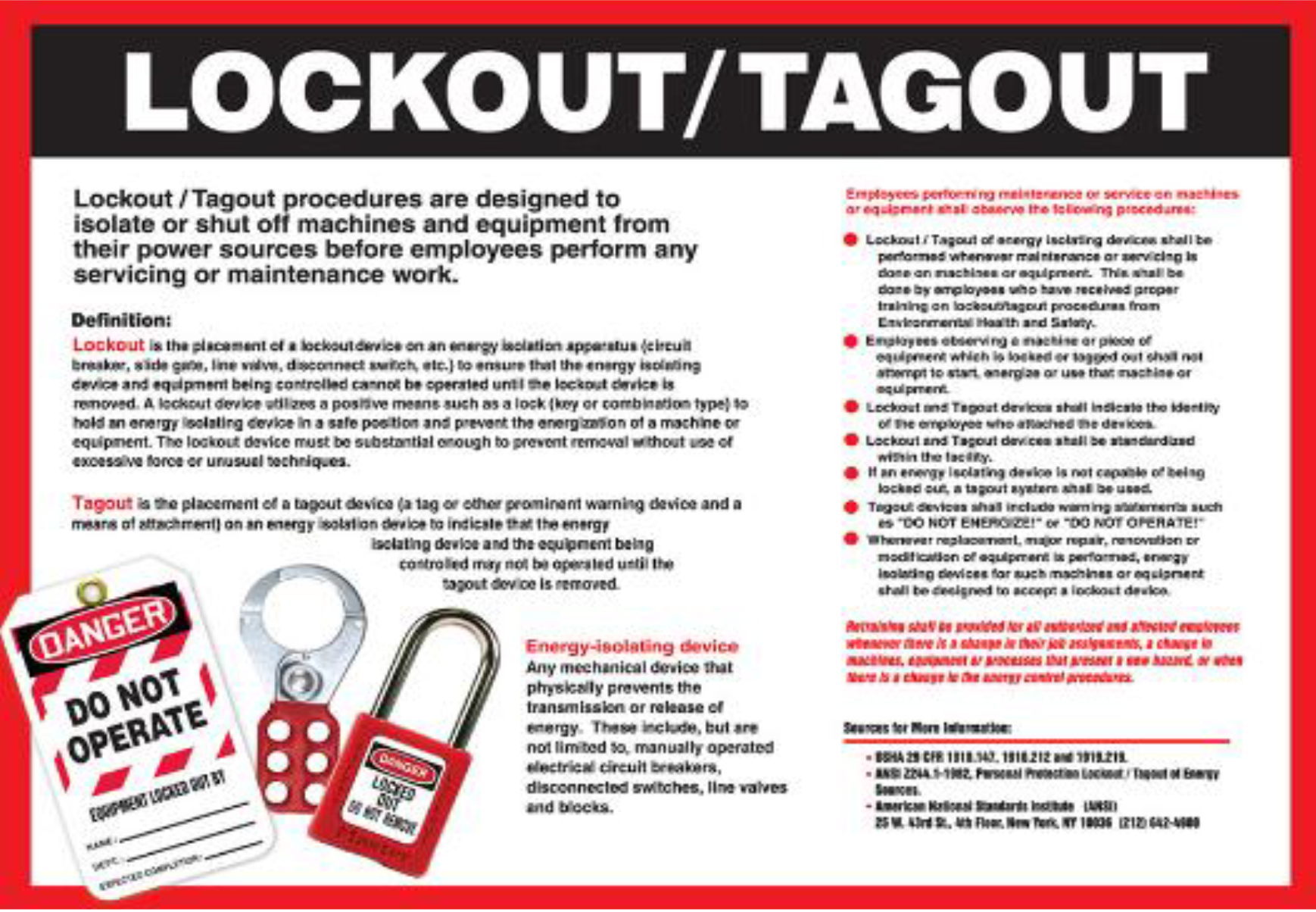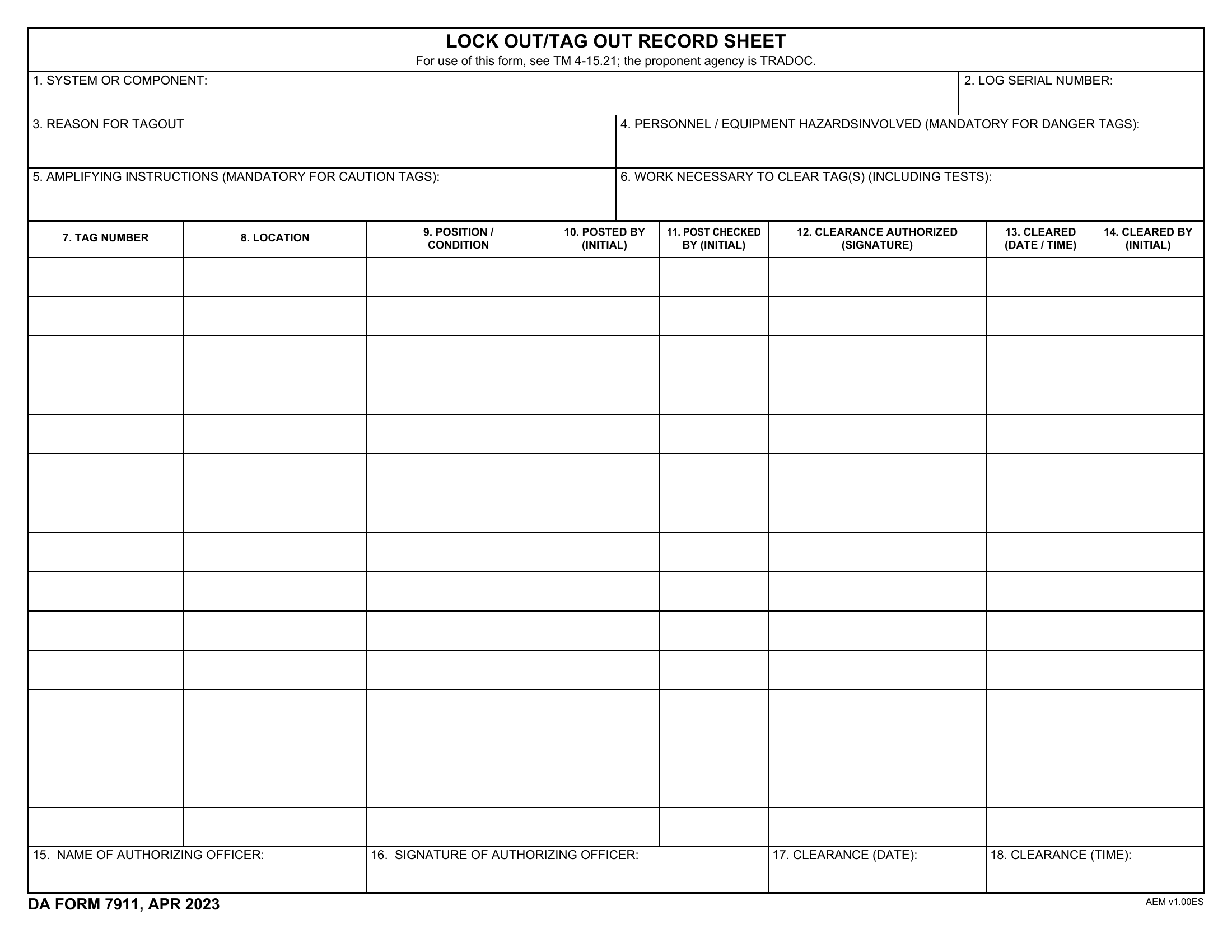
Every time a machine is serviced, a silent threat lingers—unexpected energization. It’s not a hypothetical risk. According to OSHA, failure to control hazardous energy accounts for nearly 10% of serious accidents in manufacturing. At the heart of preventing these incidents lies a simple but critical document: the lock out tag out record sheet.
More than just a form, it’s a legal record, a communication tool, and a verification system. Yet too often, it’s treated as administrative clutter—filled out after the fact, lost, or skipped entirely. This undermines the integrity of the entire LOTO program. When used correctly, a LOTO record sheet ensures accountability, supports audits, and protects workers from life-threatening hazards.
This guide cuts through the compliance noise. You’ll learn how to design, implement, and manage effective LOTO record sheets—backed by OSHA standards, real field practices, and operational insight.
Why a LOTO Record Sheet Isn't Optional
A lock out tag out record sheet isn’t just good practice—it’s required. OSHA 29 CFR 1910.147(c)(6) mandates that employers document each servicing or maintenance activity involving energy isolation. That documentation is the record sheet.
Its purposes are threefold: - Provide proof of compliance during inspections - Record who locked out, when, and which energy sources were controlled - Serve as a communication log for shifts, contractors, and supervisors
Skip it, and you’re not just risking a citation—you’re risking lives.
For example, a maintenance technician at a Midwestern packaging plant was injured when a conveyor restarted during servicing. Investigation revealed that while locks were used, no record existed to confirm isolation. The absence of a completed LOTO sheet made verification impossible—and the company faced a $78,000 OSHA fine.
Essential Elements of an Effective LOTO Record Sheet
A strong lock out tag out record sheet isn’t a blank form waiting to be filled. It’s structured to prevent omissions and ensure clarity. Include these core components:
1. Equipment Identification Specify the exact machine, system, or component. Use unique identifiers: - Asset number - Location (e.g., Production Line 3, Pump Station B) - Equipment nameplate details
Example: “Hydraulic Press – Model HP-2200, Serial #9145X, Cell 4A”
2. Date and Shift Information Record the start and expected end time of the maintenance work. This is vital for shift handoffs.
3. Authorized Employee Details List every worker applying a lock. Include:
- Full name
- Employee ID
- Department
Never allow generic entries like “Maintenance Team.” Individual accountability is non-negotiable.
4. Energy Source Breakdown List every type of energy isolated:
- Electrical (main disconnect ID)
- Pneumatic (valve number)
- Hydraulic (pressure release point)
- Mechanical (spring tension, gravity)
- Chemical or thermal sources
Use checkboxes or line items for each source.
5. Verification of Isolation Document how zero energy was confirmed. Methods include:
- Testing circuits with a voltage meter
- Observing pressure gauges drop to zero
- Physically checking line blinds
This step separates true LOTO from ritualistic compliance.
6. Supervisor Approval and Sign-Off A responsible supervisor reviews and signs once all steps are complete. This confirms system readiness for work.
7. Return-to-Service Log
When work ends, record: - Time of re-energization - Names of employees removing locks - Final safety check confirmation
Common Mistakes That Undermine LOTO Record Sheets
Even with a well-designed form, execution often fails. Here are recurring pitfalls:
1. Filling Out After the Fact Some teams complete record sheets at the end of the shift. This defeats the purpose. Documentation must happen in real time—each step verified and recorded before proceeding.
2. Incomplete Energy Source Listing One facility recorded only electrical isolation for a packaging machine, ignoring pneumatic actuators. A residual air release injured a technician during disassembly.
Fix: Use standardized equipment-specific LOTO procedures (ESLMs) that list all energy types.
3. Shared or Generic Locks Multiple workers using the same lock or tag blurs accountability. Each employee must use a personal lock with their name and contact info.
4. Missing Shift Handoffs Night crews inherit incomplete work. Without a signed record sheet, incoming staff assume isolation is active when it may not be.
Solution: Include a “Shift Transfer” section requiring both outgoing and incoming authorized employees to sign.
5. Storing Records Improperly Paper sheets stuffed in binders are easily lost or damaged. Digital logs offer better traceability and searchability.
Digital vs. Paper LOTO Record Sheets: What Works Best
The debate isn’t about technology—it’s about reliability, accessibility, and audit readiness.
| Factor | Paper Sheets | Digital Systems |
|---|---|---|
| Real-time Access | Limited to physical location | Cloud-based, accessible on tablets |
| Error Prevention | Manual entry risks omission | Mandatory fields, dropdowns |
| Audit Trail | Hard to search, fragile | Timestamped, versioned, exportable |
| Integration | None | Links to CMMS, work orders |
| Training Support | Static | Can embed videos, diagrams |
Many plants use a hybrid model: paper for field use, scanned into a digital archive. But forward-thinking facilities are moving to mobile LOTO apps that generate record sheets on-site, sync to central systems, and send alerts for overdue procedures.
A food processing plant in Oregon reduced LOTO errors by 63% within six months of switching to a tablet-based system—primarily because digital checklists prevented skipped steps.
5 Practical LOTO Record Sheet Templates You Can Use
While OSHA doesn’t prescribe a format, these templates are proven in industrial settings:
1. Basic Single-User Form Best for routine, short-duration tasks by one technician. - Minimal fields: name, date, equipment, energy types, signature - Fits on one side of A4 - Ideal for small workshops
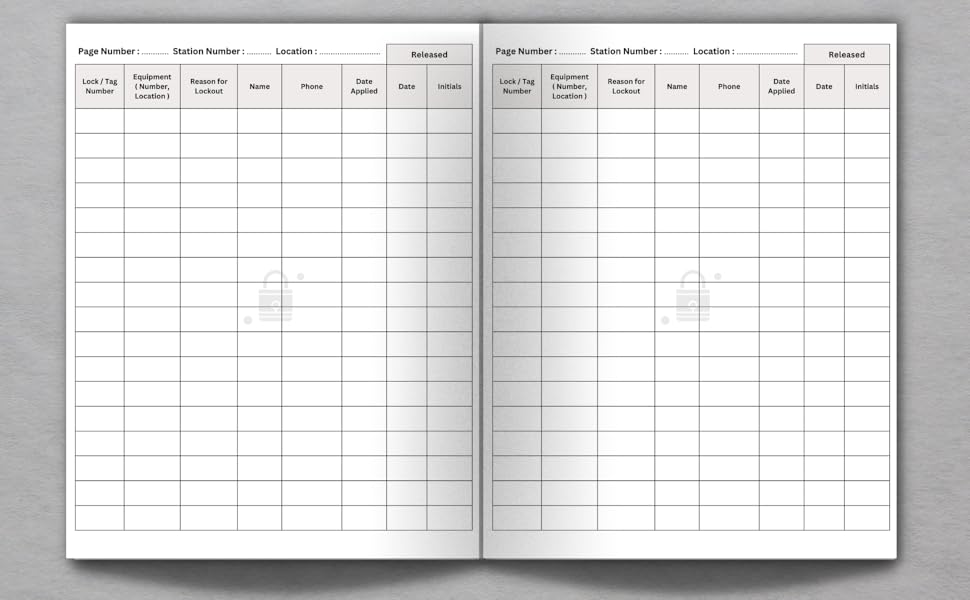
2. Multi-Employee Coordination Sheet For team jobs with overlapping responsibilities. - Table layout listing each worker, lock ID, and energy source - Includes “Lock Application” and “Lock Removal” columns - Space for pre-job briefing notes
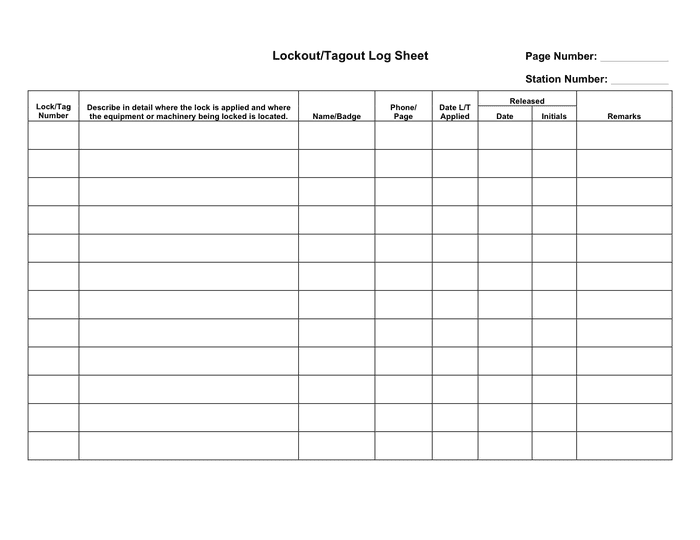
3. Shift Handover Record Designed for continuous operations. - Clear sections for outgoing and incoming teams - Confirmation of lock status and work progress - Supervisor verification lines
4. Contractor LOTO Log For third-party maintenance. - Contractor company, worker ID, and supervisor contact - Site safety briefing acknowledgment - Host employer sign-off
5. Equipment-Specific LOTO Record Tied to a particular machine. - Pre-filled energy sources and isolation points - Diagram of lock placement - Verification steps tailored to the equipment
Downloadable templates should be editable (e.g., PDF forms or Word docs) and printable in the field.
How to Integrate LOTO Record Sheets Into Your Safety Workflow
A record sheet is useless if it’s disconnected from daily operations. Embed it into your process:
- Before Lockout
- - Retrieve the machine-specific LOTO procedure
- - Gather required locks, tags, and tools
- - Hold a 2-minute safety huddle
- During Isolation
- - Fill out the record sheet as steps are completed
- - Verify each energy source with a second technician if possible
- - Attach the sheet to a clipboard near the lockbox
- During Work
- - Keep the sheet visible to all personnel
- - Update if scope changes or additional energy sources are found
- Before Re-energizing
- - Supervisor walks the site, checks locks, and confirms work is done
- - Each worker removes their own lock—documented on the sheet
- - Final sign-off closes the record
- After Completion
- - Archive the sheet (digitally or physically) for at least one year
- - Use records in monthly safety reviews
Training and Auditing: Ensuring Record Sheets Are Used Right
Having a form isn’t enough. OSHA requires annual inspections of LOTO procedures—including record sheets.
During audits, check for: - Consistent use across departments - Accuracy of entries - Evidence of verification - Proper storage and retrieval
Train employees not just on how to lock out, but how to document it. Role-playing scenarios help: - “You’re taking over a job mid-shift. The record sheet is missing. What do you do?” - “A coworker asks you to sign a completed sheet you didn’t participate in. How do you respond?”
Reinforce that falsifying a LOTO record sheet is a disciplinary offense—and a potential OSHA willful violation.
Choose Clarity Over Convenience
A lock out tag out record sheet is more than a compliance checkbox. It’s a living document that protects people, maintains operational continuity, and stands as evidence of a safety-first culture.
Too many organizations treat it as paperwork. The best ones treat it as a protocol.
Start by auditing your current sheets. Are they clear? Are they used correctly? Can a third party understand what happened just by reading them?
Then, refine your templates, train your teams, and integrate the record into every LOTO event—no exceptions.
Because when a machine unexpectedly starts, the record sheet isn’t just a form. It’s the difference between a near-miss and a tragedy.
Frequently Asked Questions
What is a lock out tag out record sheet used for? It documents each step of the energy isolation process, including who locked out equipment, which energy sources were controlled, and when the system was verified safe.
Is a LOTO record sheet required by OSHA? Yes. OSHA 29 CFR 1910.147(c)(6) requires employers to certify that energy control procedures are being followed, typically through a documented record.
How long should LOTO record sheets be kept? At a minimum, one year. Some industries or internal policies may require longer retention, especially for high-risk equipment.
Can a digital record replace a paper LOTO sheet? Yes, as long as it captures all required information, is completed in real time, and is accessible for audits.
Who is responsible for filling out the LOTO record sheet? The authorized employee performing the lockout is responsible, with verification and sign-off by a supervisor.
Should contractors use the same LOTO record sheet? Yes, but the sheet should include contractor details and a sign-off from both the contractor supervisor and the host employer.
What happens if a LOTO record sheet is incomplete or missing? The lockout procedure is considered non-compliant. Work should stop until isolation can be verified and documentation completed.
FAQ
What should you look for in Lock Out Tag Out Record Sheet Best Practices and Templates? Focus on relevance, practical value, and how well the solution matches real user intent.
Is Lock Out Tag Out Record Sheet Best Practices and Templates suitable for beginners? That depends on the workflow, but a clear step-by-step approach usually makes it easier to start.
How do you compare options around Lock Out Tag Out Record Sheet Best Practices and Templates? Compare features, trust signals, limitations, pricing, and ease of implementation.
What mistakes should you avoid? Avoid generic choices, weak validation, and decisions based only on marketing claims.
What is the next best step? Shortlist the most relevant options, validate them quickly, and refine from real-world results.